
Mumbai, which adds 37 per cent to the total direct tax mop-up, has reported tax collection of Rs 4.93 trillion so far, against the full-year target of Rs 5.35 trillion.

Analysts say domestic banks' dependence on local depositors insulates them from the crisis.

UBS stepping in to save Credit Suisse with a $3.2-billion acquisition has provided the beleaguered Swiss bank's India employees a glimmer of hope. The surprise deal - engineered by the Swiss government - has triggered optimism of fewer job losses at Credit Suisse's India unit and better synergies at key verticals, such as wealth management and investment banking. "UBS is a much stronger hand. Coming within its fold will give Credit Suisse's wealth management and investment banking divisions a good home.

Transactions were allegedly not reported correctly in the tax returns for FY20.

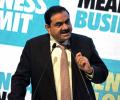
More than a dozen entities, both domestic and foreign, had come under the regulatory glare over alleged short-selling before and after the publication of the Hindenburg research report against Adani Group, two people familiar with the development said. The Securities and Exchange Board of India (Sebi), which is examining the rise in stock values of Adani Group in the past few years, is also scrutinising the trade data and trade pattern of these entities allegedly involved in short-selling and made significant profit. Enquiries in the trade pattern of these entities reflected a profit of over Rs 30,000 crore, pre- and post-Hindenburg saga, said one of the two people.

Equities are the go-to asset class as far as ultra-long-term returns are concerned. Over the past 123 years, global equities have provided an annualised real return of 5 per cent in US dollar terms, while bonds have delivered 1.7 per cent and short-term bills just 0.4 per cent, according to Credit Suisse's Global Investment Returns Yearbook 2023. In collaboration with the London Business School, Credit Suisse has analysed over 100 years of returns for key asset classes in 35 countries.

The Securities and Exchange Board of India's (Sebi's) proposal to re-introduce "hard underwriting" is seen as step to boost India's moribund initial public offering (IPO) markets. The regulator has proposed that in case an IPO fails to garner full subscription, the investment banker or a third-party can buy the unsubscribed shares. This practice was common during fixed-price issues prior to 1999. However, under the new book building regime, underwriting is allowed only to the extent of shortfall due to technical rejection of bids - this is referred to as "soft underwriting" and is rarely invoked.

At least 120 insurance intermediaries and aggregators from across the country are under scrutiny, mainly from Mumbai, Gurugram and Bengaluru.

Shares of Life Insurance Corporation (LIC) of India hit fresh record lows amid sustained decline in Adani Group stocks. Its stock finished at Rs 567.8, down 2.9 per cent over its previous close. The state-owned insurer's market value is now down Rs 2.4 trillion, or 40 per cent, compared to initial public offering levels.

The Securities and Exchange Board of India (Sebi) has proposed to put a stop to the practice of certain directors occupying permanent board seats at listed companies. The regulator has suggested that the directorship of any individual serving on the board should be subject to periodic approval from shareholders, at least once in five years. In a discussion paper issued on Tuesday, Sebi said a few promoters enjoyed permanency on the board, giving them an undue advantage, prejudicial to the interests of public shareholders.
'In equities, it has diversified portfolios.' 'So the short-term movement of individual stocks does not impact them.'

'I believe the modified scheme is much more beneficial and simpler.'

Friday will be a landmark day for domestic markets, with all the listed stocks entering the professed T+1 (trading plus one day) settlement cycle. About 200 stocks, which account for more than 80 per cent of India's market capitalisation, will be settled on a next-day basis, with effect from January 27. This will evidently complete the transition to the T+1 cycle that started in February 2022 with the bottom 500 stocks in terms of market value.

Ahead of the Budget, the government has achieved almost half the divestment target of Rs 65,000 crore. FY23 divestment receipts are unlikely to be anywhere close to the budgeted target.
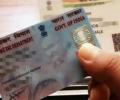
'Each state and central government body may be asked to update its system to ensure PAN is used as a common identification to access its services.'

Senior tax officials were told to focus on cash collection from the arrears so that the target for FY23 was achieved and the overall revenue position improved.

'There are unscrupulous traders who create fake invoices by showing bogus e-way bills, movement of goods.' 'Since the entities registered across different states, and kept on changing their numbers, tracing them was difficult.'
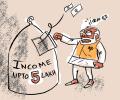
Policymakers are examining the possibility of increasing the tax-free slab to Rs 5 lakh in the two-year-old alternative personal income tax regime to make it attractive, a government official said. At present, taxpayers don't pay income tax if their taxable income is Rs 2.5 lakh and below. Increasing the threshold will reduce the tax outgo for assessees, thereby leaving more money with them to invest, the official said.

Sundararaman Ramamurthy has been an interesting choice for the publicly-listed BSE, which has seen its chief move to bigger rival -- the National Stock Exchange (NSE) -- in July. Having spent nearly two decades at the country's largest bourse, Ramamurthy is among the early architects of NSE and understands all the cogs of the exchange wheel like only a few others in the country. Just like NSE's core team, which includes its founder RH Patil, the 59-year-old Ramamurthy has worked at the Industrial Development Bank of India (IDBI) before moving to NSE in 1995.

'Yet the market didn't do all that badly because it was cushioned by domestic inflows.'
 © 2026 Rediff.com - Advertise with us - Disclaimer - Privacy Policy - Sitemap - Feedback - About us - Terms of use - Grievances